POINT OF INTEREST  WAYS

Romeo Germanica Trail

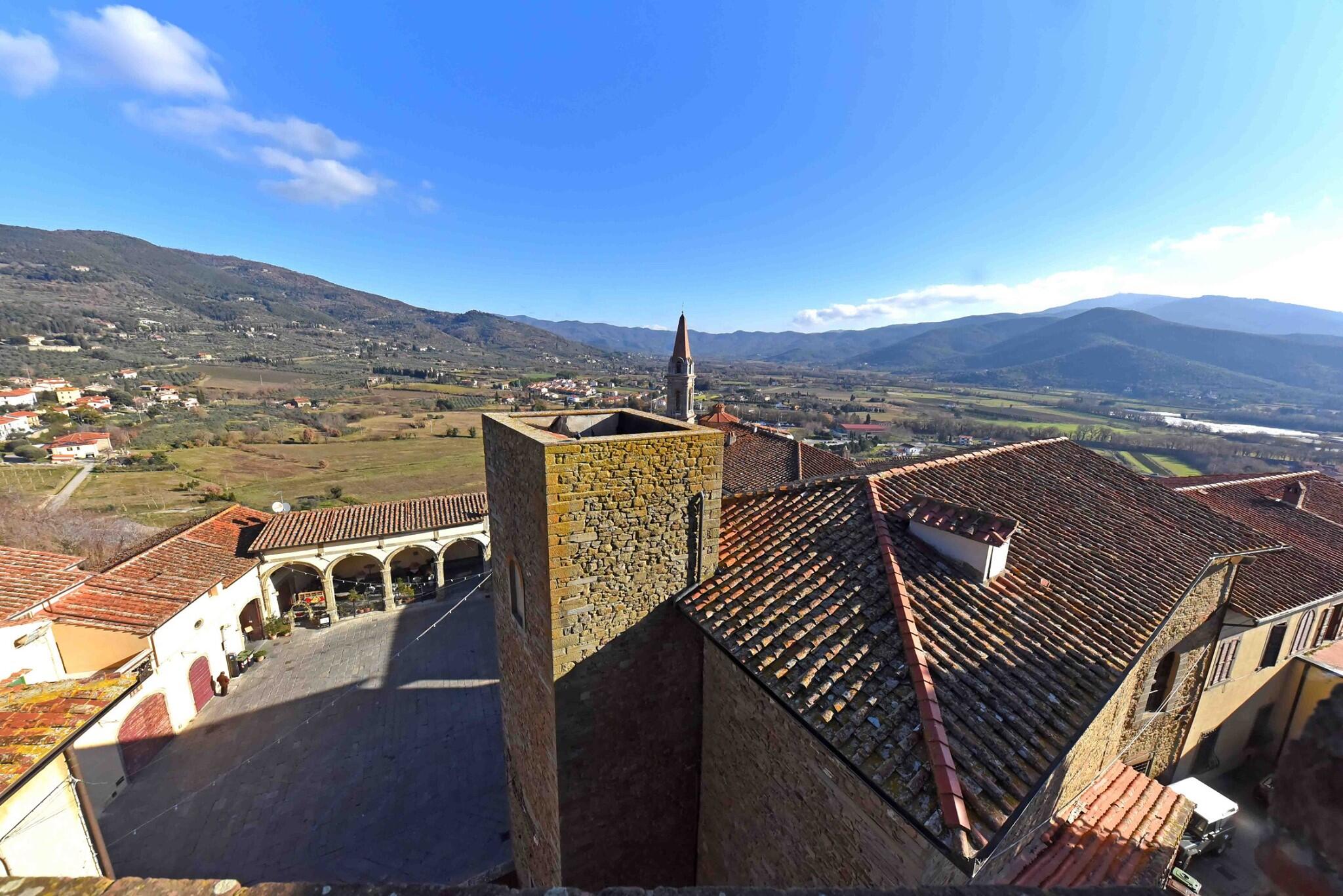
Castiglion Fiorentino is present within the Via Romea Germanica route as the arrival point of stage number 80

×

More information :

Castiglion Fiorentino is part of the Via Romea Germanica route as the arrival point of stage number 80 (the 32nd within Italian territory), from Arezzo to Castiglion Fiorentino, and as the starting point of stage 81 (the 33rd in Italy), from Castiglion Fiorentino to Cortona.

Alberto was born around the end of the 12th century and in 1232 became Abbot of the Benedictine Monastery of the Holy Virgin Mary in Stade, an important port city located at the mouth of the Elbe River in Germany.

In the monastery—highly influential thanks to its land holdings—Abbot Alberto recognized the need to introduce a stricter ecclesiastical discipline, inspired by the Cistercian rules. To obtain permission for this reform, he set out on a journey to Rome, the heart of Christianity, seeking the approval of Pope Gregory IX. The Pope granted his consent for the proposed reform, but Alberto’s fellow monks, along with the Archbishop of Bremen, rejected it. Their opposition was driven more by their political alignment with the House of Welf than by any desire for monastic reform.

Disheartened, Alberto resigned as abbot and entered the Friary of the Minor Brothers of St. John in Stade, a community dedicated to the Franciscan ideal of poverty. There, he devoted himself to writing the Annales, a Latin chronicle of the major ecclesiastical and political events of his time. Included in this work are several travel itineraries, featuring precise information about the locations and distances to be covered, road conditions, and the exact length of each stage in German miles.

The original manuscript is preserved in the Herzog August Library in Wolfenbüttel, Germany.

Today, Abbot Alberto's journey forms the official route of the Via Romea Germanica.

How to Get Here

Address:

Piazza del Municipio 8
52043 Castiglion Fiorentino (AR)

View in Maps

Contacts

Below are our contacts through which you can reach us:

Share the page

Below are our references through which you can contact us:

You might also be interested in ...

Drag or swipe the images for a more immersive experience.

Porta Perugina

Al termine di una ripida scalinata è disponibile l'accesso occidentale al fortilizio del Cassero

View More

Castle of Montecchio Vesponi

The Montecchio Vesponi Castle is one of the most evocative fortresses in all of Tuscany.

View More

Museo Archeologico

The Civic Archaeological Museum of Castiglion Fiorentino was founded in 2001 to exhibit the materials found during archaeological investigations carried out in the area

View More

Loggiato Vasariano

In front of the Town Hall we find the so-called Vasari loggia: in reality the nine-arched construction, built on the occasion of the reconstruction of the current Town Hall square, dates back to 1513.

View More

Church of Sant'Agostino

View More

Church of San Francesco

The church, overlooking the square of the same name, was built by the Franciscans in the mid-13th century over a pre-existing 12th-century structure, first dedicated to San Salvatore and then to San Leonardo.

View More

Collegiate Church of Saints Michael and Julian

Stands out for its neoclassical structure and its loggia with massive columns resting on travertine bases.

View More

Church of Consolation

In the Middle Ages, at the foot of the village of Castiglion Fiorentino, there stood a small shrine containing an image of the Madonna and Child attributed to Luca Signorelli.

View More

Church of the Good Death

The Company of Prayer and Death, or Company of the Good Death, was founded in 1572 to organize a service of prayer, transportation, and burial of the deceased.

View More

Theater of Mario Spina

The history of the Teatro Comunale begins at the end of the 16th century, when the Grand Duke of Tuscany Ferdinand I authorized the Podestà of Castiglion Fiorentino to start an Academy to perform comedies.

View More